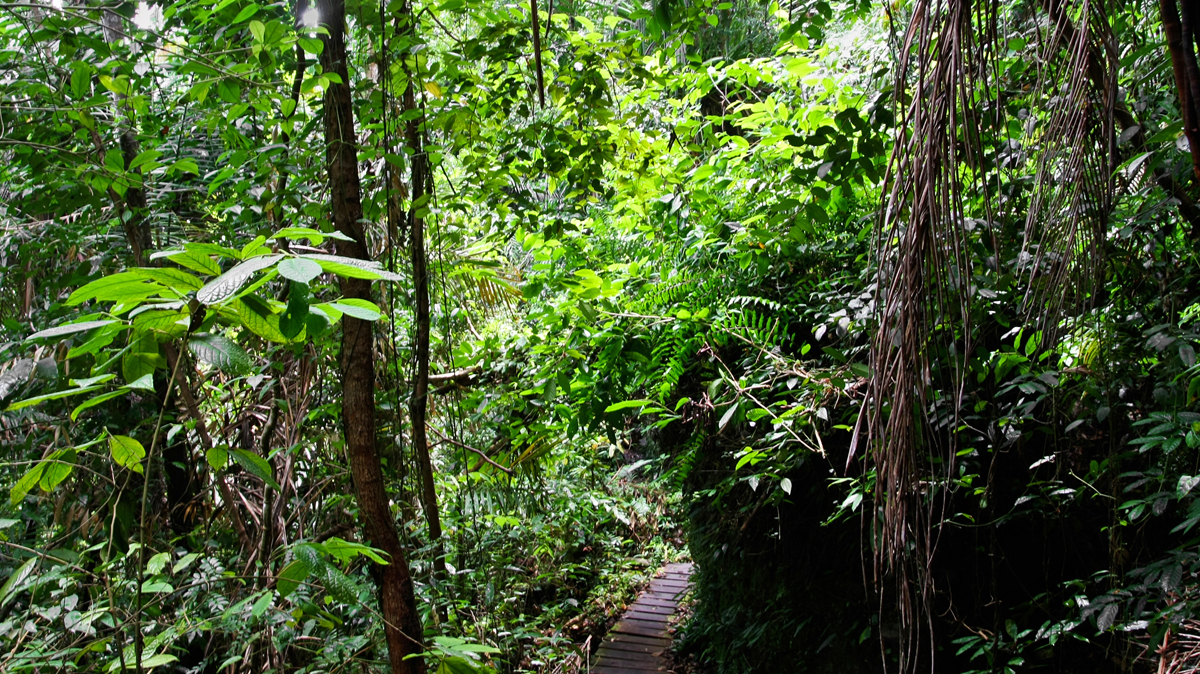
Forests play a vital role in supporting the global environment by providing timber and water resources, conserving biodiversity, mitigating climate change through CO₂ sequestration, and helping to prevent natural disasters. JAC Group supports reforestation initiatives through tree-planting activities aimed at restoring forests, which are essential to the sustainability of both the environment and society.
JAC Group conducts afforestation activities in Southeast Asia under its PPP Project, named after the phrase “One Placement creates one Plant to save the Planet”, and is working to restore tropical rainforests as part of its efforts to increase the Earth’s green cover.
Under this initiative, one tree is planted for every person who changes jobs through a JAC Group company. As a recruitment company, we are able to contribute to environmental conservation while wishing for the growth and development of both our client companies and registered candidates. This initiative also creates a link between business growth and nature conservation. In addition, to raise awareness of this initiative among our client companies and candidates, we send emails each year reporting the results of the tree-planting activities to client companies that made placements during the year and to candidates who changed jobs through our services.
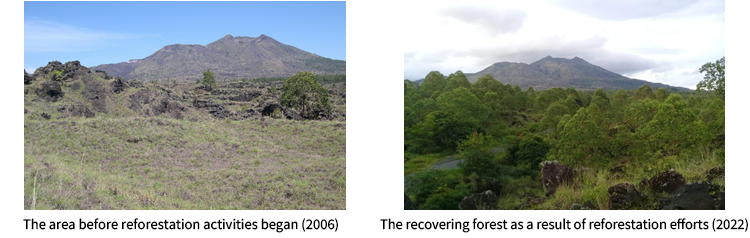
Since 2008, the JAC Group has been involved in reforestation activities in Bali, Indonesia, through the non-profit organization NPO Asian Green Forest Network (AGFN), to restore the original aquifer and watershed function* of the forest by planting indigenous tree species such as ampupu (Eucalyptus urophylla), candlenut (Aleurites_moluccanus) and melina (Gmelina arborea) in the devastated land that was turned into grassland by the eruption of Mount Batur.
This area had been left barren after the forest was destroyed by a volcanic eruption 159 years ago. As a result, the lake’s water level had fallen by as much as two metres, while the volcanic lava had gradually weathered into sand, leaving the land covered only with short grasses (photo on the left).
Through tree-planting activities initiated by the Asian Association for Friendship and Reforestation in 2007, the forest has been steadily restored (photo on the right).
The planting density is estimated at approximately 600 trees per hectare. Local residents now recognise the area as having returned to a forest ecosystem, and the water level of the lake, which provides water for local communities, is also showing signs of recovery.
* Aquifer and watershed function: The ability of forest soils to store precipitation and equalize the volume of water flowing into rivers, thereby alleviating flooding and stabilizing river flows. It also refers to the ability of rainwater to pass through forest soils, thereby purifying the water quality.
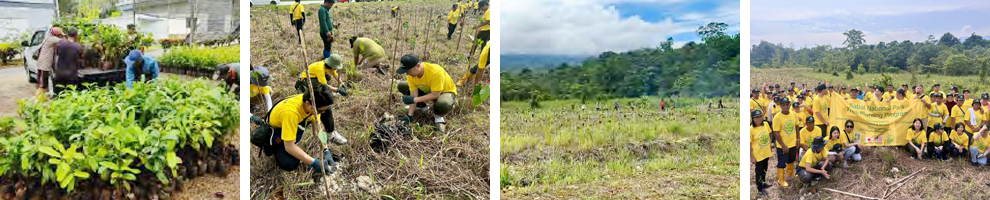
Since 2008, the JAC Group has been involved in the restoration of lowland rainforest vegetation in Borneo, Malaysia, mainly by planting native dipterocarp species in secondary forest degraded by logging, and in the conservation of mangrove plantations, through the Japan Malaysia Association.
Through the association, we also support the work of the Orangutan Conservation Centre in Semenggoh Wildlife Sanctuary, Sarawak whose work not only aims to restore and conserve Malaysia's tropical rainforests, but also to save the orangutans and other life forms that inhabit these forests.
In addition, the project contributes to local employment by engaging local communities in seedling cultivation and tree-planting activities, while also promoting the greening of the region.
In FY2025, at Sabal National Park in Sarawak, Borneo Island, activities included sowing seeds of native species and managing seedlings, maintaining previously planted trees and preparing planting sites, and carrying out afforestation activities. In addition, on Borneo Island, an annual PPP Tour is held to raise employee awareness, during which participants visit the site, plant trees themselves, and interact with local communities. In September 2025, a tree-planting project was carried out with the participation of 10 Group employees and 60 local residents.
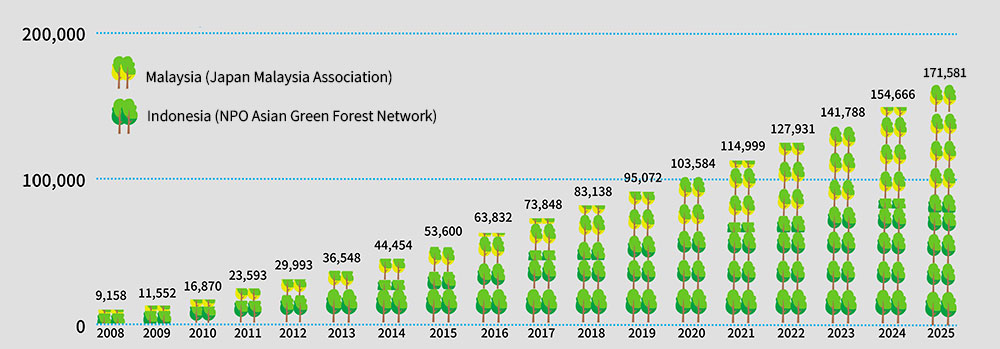
Between 2008 and 2025, the JAC Group planted a cumulative total of 90,100 trees in Bali, Indonesia, and 81,481 trees in Borneo, Malaysia.
Cumulative number of planted trees by JAC Group
In addition to the afforestation activities that JAC Group has conducted in Indonesia and Malaysia since 2008, we launched the JAC Moringa Forest Project in 2024 in Miyakojima, Okinawa, and Malaysia. The project promotes forest restoration through the planting of moringa trees, which have more than ten times the CO₂ absorption capacity of Japanese cedar trees. Through this initiative, we are working to further address global warming, conserve local ecosystems, and revitalise local communities.
JAC Group has supported the activities of the Moringa Forest Project Association (Moringa Forest Project, MFP) in the Karimata area of Miyakojima City, Okinawa Prefecture, and began planting moringa trees in 2024. By 2025, a cumulative total of 4,000 moringa trees had been planted.
While the average forest coverage in Okinawa Prefecture is 46%, Miyakojima is very low at 16.4%. In addition, CO2 emissions are on the rise due to the rapid increase in tourism since 2015 and the accompanying increase in construction work. In order to reduce CO2 emissions while promoting tourism, the city's main industry, Miyakojima City is trying to solve the problem by planting trees. The MFP was established with the aim of not only realising a decarbonised society through the planting of moringa trees, but also to contribute to the local community through business development and other activities that utilise the high nutritional value of moringa and its medicinal benefits that have been used since ancient times, and JAC supports its activities.
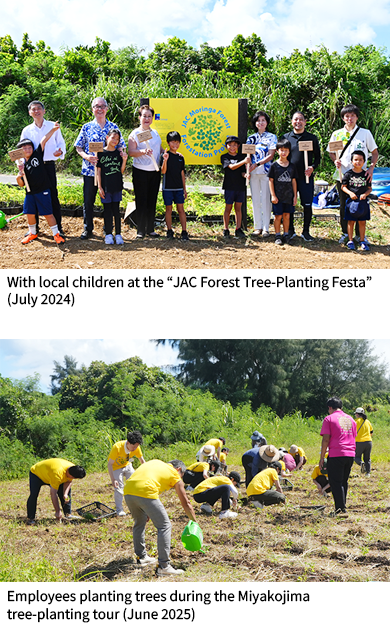
In July 2024, when the tree-planting initiative was launched, the “JAC Forest Tree-Planting Festa” was held in the Karimata area. The president of the local residents’ association, the superintendent of the Board of Education, the president of MFP, JAC Group executives, and local residents planted 120 moringa seedlings together. The event was featured in the Miyako Mainichi Shimbun and Miyako Shimpo, attracting attention as an environmental conservation initiative within the local community.
In June 2025, a tree-planting tour was held in Miyakojima, with the participation of the Group’s advisor, president, and 12 employees. In addition to planting trees, participants engaged in dialogue with local residents, government officials, and school representatives, deepening their understanding of the significance of corporate environmental conservation initiatives. The tour also encouraged participants to consider how they can contribute through their daily lives and work and helped foster greater environmental awareness.
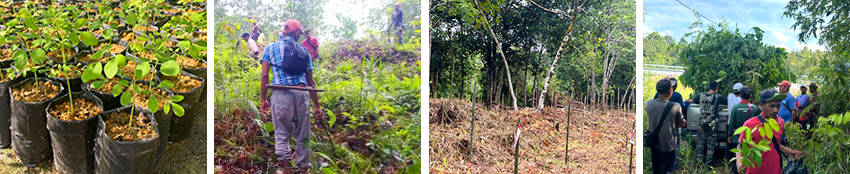
In Malaysia, with the cooperation of the Japan Malaysia Association (JMA), JAC Group has been planting moringa saplings on Borneo Island since 2024. In 2025, a total of 3,900 moringa saplings were planted, bringing the cumulative number of trees planted to 7,900. Further tree planting is planned on multiple occasions in the future, taking into consideration the climate in Malaysia.
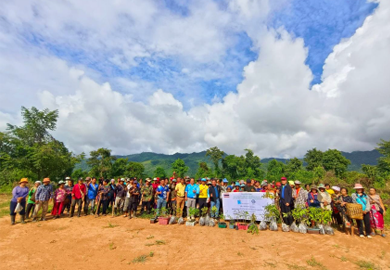
In 2025, JAC Group also launched reforestation activities in Thailand through OISCA. The Wa Wi Subdistrict of Mae Ai District, Chiang Rai Province, where tree planting was carried out in 2025, is a mountainous area with limited forest cover. During the dry season, the increasing number of dead trees heightens the risk of forest fires. In 2025, approximately 200 local residents participated in the project, and 3,000 trees were planted. The activity was conducted in collaboration with local communities and involved 3,000 trees being planted by around 200 residents.
OISCA promotes its tree-planting activities by engaging in ongoing dialogue with local communities to gain their understanding and cooperation. The tree species selected for planting reflect the wishes of local residents and include fruit-bearing varieties that can also contribute to local livelihoods. This approach of selecting tree species that provide benefits to local communities is reflected in the project activities.
In addition, JAC Group supported OISCA’s Children’s Forest Program in 2025. Through this initiative, activities include tree planting in schools and local communities, guidance on planting and maintenance, environmental education, and the provision of school supplies. The programme aims to foster a respect for nature among children and to help develop the next generation of individuals who will contribute to future forest conservation efforts. In 2025, a total of 1,000 trees were planted at seven schools across four regions of Thailand.